✉️ Frank's Five — Issue No. 5
Friday, July 3, 2026 • This week's theme: Look Up
Morning, friend. Fireworks tomorrow night for many of you, so this week the almanac practices by pointing at the sky a day early. Everything below is happening over your head right now, which Frank finds both humbling and rude.
🥇 The Headliner
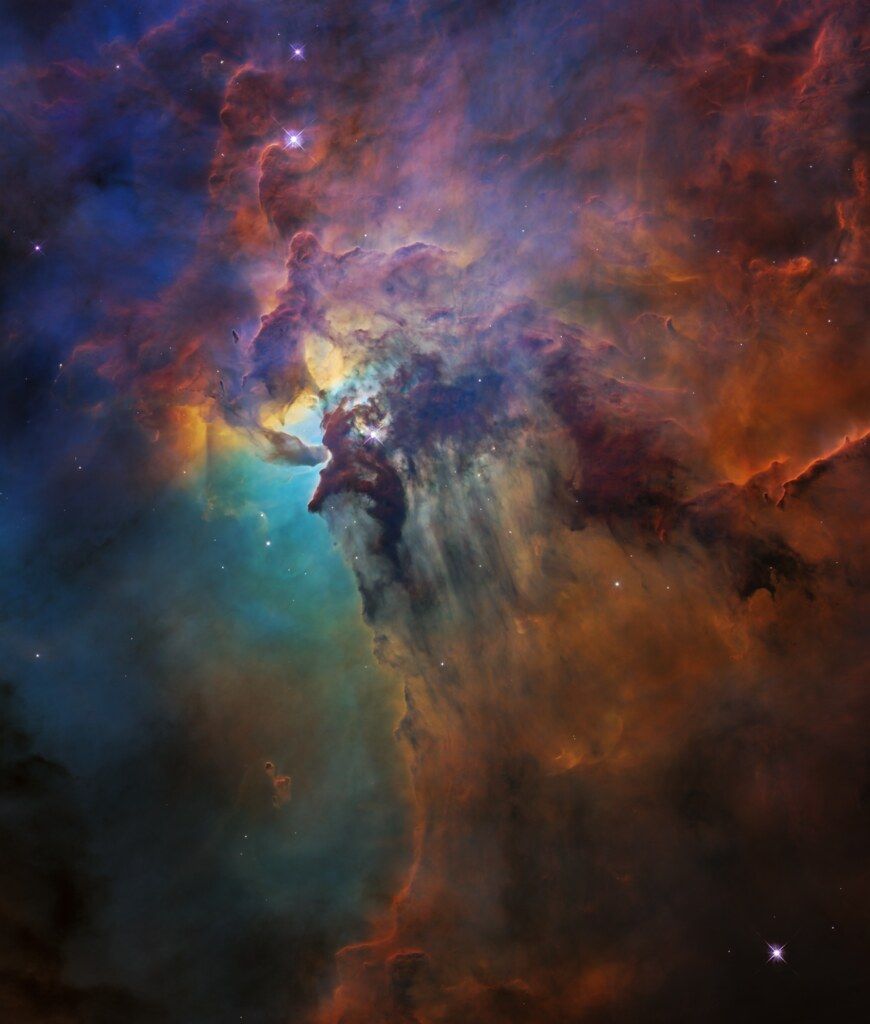
The story: in 2009, astronomers led by Arnaud Belloche at the Max Planck Institute for Radio Astronomy were surveying Sagittarius B2 — an enormous cloud of gas and dust near the galactic center — with the IRAM 30-meter radio telescope in Spain. Every molecule broadcasts its own radio fingerprint, and among the thousands of signals they combed through was the unmistakable signature of ethyl formate, a compound that on Earth turns up in raspberries (it also smells a bit like rum, which the newspapers enjoyed enormously).
Now, the fine print, because Frank always reads it to you: the cloud is not a smoothie. It's mostly hydrogen, spread absurdly thin, seasoned with alcohols, acids, and worse. If you could stand there and sniff — you can't, please don't — the raspberry note would be one whisper in a very unwholesome choir. But the molecule is genuinely there, in quantities that would embarrass every jam shelf on Earth.
Frank's takeaway: chemistry doesn't care where it happens. The same little molecule doing honest work in your berry patch is drifting through the middle of the galaxy, 25,000 light-years from the nearest slice of toast.
🔢 Four More Beauties
- No. 2 There are more trees on Earth than stars in the Milky Way. A 2015 study in the journal Nature counted roughly 3 trillion trees; our galaxy holds an estimated 100–400 billion stars. The forest wins by a comfortable margin. — Number Facts
- No. 3 Olympus Mons on Mars is about two and a half times the height of Mount Everest — a volcano roughly 22 kilometers tall, so wide and gently sloped that standing on it, you might not notice you were on a mountain at all. — Space Facts
- No. 4 The Apollo astronauts' bootprints are still on the Moon, and with no wind or water to erase them, they could last millions of years. — Space Facts
- No. 5 According to NASA, the Sun holds about 99.8 percent of all the mass in the solar system. Everything else — planets, moons, comets, you, Frank's index cards — splits the leftover fifth of a percent. — Space Facts
🚫 The Weekly Debunk
"The Great Wall of China is the only man-made object visible from space." FALSE — Frank checked
Wrong twice in one sentence, which is efficient. First: the Wall is famously hard to see from orbit with the naked eye. It's long, yes, but narrow — mostly no wider than a highway — and it's built from local materials that blend into the landscape. China's own first astronaut, Yang Liwei, reported after his 2003 flight that he couldn't spot it, and NASA has said plainly that it's generally not visible to the unaided eye in low Earth orbit. From the Moon? Not a chance.
Second: plenty of other human handiwork is visible from orbit — city lights at night, major highways and airports, reservoirs, even the greenhouses of southern Spain. So the one thing the legend says you can see, you mostly can't, and the things it says you can't see, you can. A perfect specimen. Frank keeps it in a place of honor.
❓ Frank's Stumper
First, the answer to last week's Stumper (the first food eaten in space by an American): applesauce, squeezed from an aluminum tube by John Glenn aboard Friendship 7 in 1962. It settled an actual scientific question — nobody was certain swallowing would work properly in weightlessness. It works fine. The applesauce reviews were lukewarm.
This week's Stumper: Which country has the most time zones in the world?
Answer revealed in next Friday's email. Hint: it is not Russia, and Frank will accept your gasp in advance.
« Issue No. 4: The Kitchen Shelf | Back to the Archive | Issue No. 6: Around the World in Five Facts »