Home » Fact Library » Science Facts
⚗️ Science Facts
Science is just the world with the lid off, and Frank finds the world plenty strange enough without embellishing. Here are forty-three verified facts about the physics of everyday life, the chemistry in your kitchen, the peculiar machine you call a body, and the weather overhead. No exaggeration, no hand-waving — just the honest, checkable truth, which as ever is stranger than fiction.
Everyday Physics
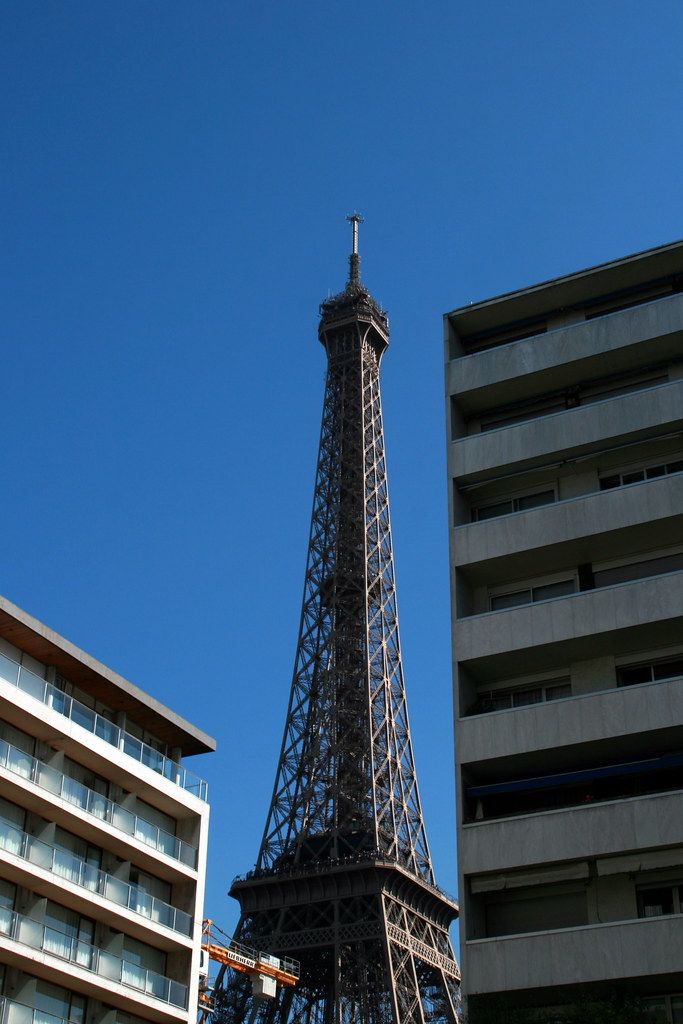
- FACT #100 The Eiffel Tower gets taller in summer. Iron expands when heated, so on a hot day the tower stands roughly 15 centimeters higher than in winter — and it can lean slightly away from the sun as the sunny side warms and grows. (This one's the reigning Fact of the Week for a reason.)
- FACT #101 Hot water can freeze faster than cold water under the right conditions — a genuinely puzzling effect called the Mpemba effect. Scientists still argue about exactly why, which is Frank's favorite kind of fact: real, repeatable, and not fully explained.
- FACT #102 Glass is not a slow-flowing liquid. It's an amorphous solid, and the old story that medieval cathedral windows are thicker at the bottom because the glass "flowed" is a myth — that's just how the glass was made. (See Myths Debunked for the full eviction notice.)
- FACT #103 Lightning is hotter than the surface of the Sun. A bolt can briefly heat the surrounding air to roughly 30,000 kelvin — several times the Sun's surface temperature — and that sudden expansion of air is the thunder you hear.
- FACT #104 Sound travels faster through water than through air — roughly four times faster — because the molecules are packed closer together to pass the vibration along. Whales exploit this to "talk" across enormous distances.
- FACT #105 A grandfather clock and a child's swing keep time by the same rule: for small swings, a pendulum's period depends on its length, not on how far it swings or how heavy the weight. Galileo spotted this watching a lamp sway in a cathedral.
- FACT #106 When you rub your hands together and they warm up, you're converting the energy of motion into heat through friction — a small, personal demonstration of the conservation of energy.
- FACT #107 Why ice is slippery is a trickier tale than it sounds: physicists now attribute most of the slipperiness to a thin, loosely bound layer of mobile molecules that naturally coats the surface of ice, rather than to pressure from your skates alone.
- FACT #108 Metal feels colder than wood at the same temperature because it conducts heat away from your hand far faster. The two are equally cold — your skin is just a poor thermometer and a good heat-loss detector.
Kitchen & Everyday Chemistry
- FACT #109 Water expands when it freezes, which is why ice floats and why a forgotten bottle bursts in the freezer. This oddity — solid less dense than liquid — is unusual among substances and is a big reason lakes freeze top-down, sparing the fish below.
- FACT #110 Bananas are slightly radioactive. They're rich in potassium, and a small fraction of natural potassium is the radioactive isotope potassium-40. The dose is harmless — you'd need a preposterous quantity to notice — but it's real enough that scientists jokingly measure tiny exposures in "banana equivalent doses."
- FACT #111 Honey essentially never spoils. Its low water content and natural acidity make it a hostile place for microbes, which is how honey sealed in ancient Egyptian tombs was found edible thousands of years later. (More on the food shelf.)
- FACT #112 Cutting an onion makes you cry because the damaged cells release a sulfur compound that drifts up and reacts with the water in your eyes to form a mild acid. Your eyes flush it out with tears. Chilling the onion first slows the reaction.
- FACT #113 Diamond and pencil "lead" are both pure carbon. The only difference is how the atoms are arranged: diamond in a rigid three-dimensional lattice, graphite in slippery sheets that slide off onto your paper.
- FACT #114 Stainless steel resists rust because its chromium reacts with oxygen to form an invisible, self-repairing skin of chromium oxide. Scratch it, and the layer quietly reforms.
- FACT #115 Pure water is a surprisingly poor conductor of electricity. It's the dissolved minerals and salts in tap or bath water that carry current — which is precisely why mixing electricity and bathwater is so dangerous.
- FACT #116 Warm water can hold less dissolved gas than cold water, which is why a soda goes flat faster when it's warm and why a pot of water "sings" with tiny bubbles well before it boils.
- FACT #117 Salt lowers the freezing point of water, so scattering it on an icy road makes the ice melt at temperatures below the normal freezing mark. The same trick lets an old-fashioned ice-cream churn get cold enough to work.
"There is more than an entire football field's worth of blood vessels inside you — laid end to end, an adult's blood vessels would stretch tens of thousands of miles, enough to circle the Earth several times over."
Frank says: and it all fits, quietly, while you're reading this.
The Human Body
- FACT #118 Your body contains more bacterial cells than the "official" ones people usually count as human — recent estimates put the ratio at roughly one to one, a far cry from the old "ten to one" claim. Either way, you are very much a walking ecosystem.
- FACT #119 Stomach acid is strong enough to dissolve many metals — it's largely hydrochloric acid. You don't digest yourself only because the stomach lining is constantly rebuilt, replacing itself every few days.
- FACT #120 The strongest muscle for its size in the human body is the masseter, your jaw muscle. It can clench the back teeth with a force of well over a hundred pounds.
- FACT #121 Bone is, ounce for ounce, remarkably strong — healthy bone is often compared favorably to steel for its strength-to-weight ratio, while being light enough to let you walk around all day.
- FACT #122 You are taller in the morning. Overnight, the soft discs between your vertebrae rehydrate and decompress, so most people measure up to a centimeter or so taller shortly after waking than at day's end.
- FACT #123 The human eye can distinguish millions of colors, but the exact number is genuinely hard to pin down and varies from person to person. Frank files this one under "a lot, and let's leave it there."
- FACT #124 Your sense of smell is closely wired to memory and emotion. Smell signals reach brain regions tied to memory very directly, which is why a whiff of an old perfume or a school cafeteria can drop you into a specific moment decades gone.
- FACT #125 Adults have fewer bones than babies. Newborns start with around 300 bony pieces, many of which fuse together as they grow, leaving the familiar 206 in a grown adult.
- FACT #126 Fingernails grow faster than toenails — noticeably so — and nails on your dominant hand tend to grow a touch faster still. Nobody's entirely sure why, though better blood supply and everyday use likely play a part.
- FACT #127 Every person's tongue print, like their fingerprints, is unique. So is the pattern of ridges on the surface of the tongue.
- FACT #128 You can't tickle yourself effectively because your brain predicts the sensation of your own movements and dampens the response — the surprise, which is half of a tickle, is missing.
✉️ Yes, Frank — Send Me the Free Weekly Facts!
Join the readers who win every trivia night.
One email every Friday. No spam, no nonsense, unsubscribe whenever you like. Frank's word is good.
Materials & Light
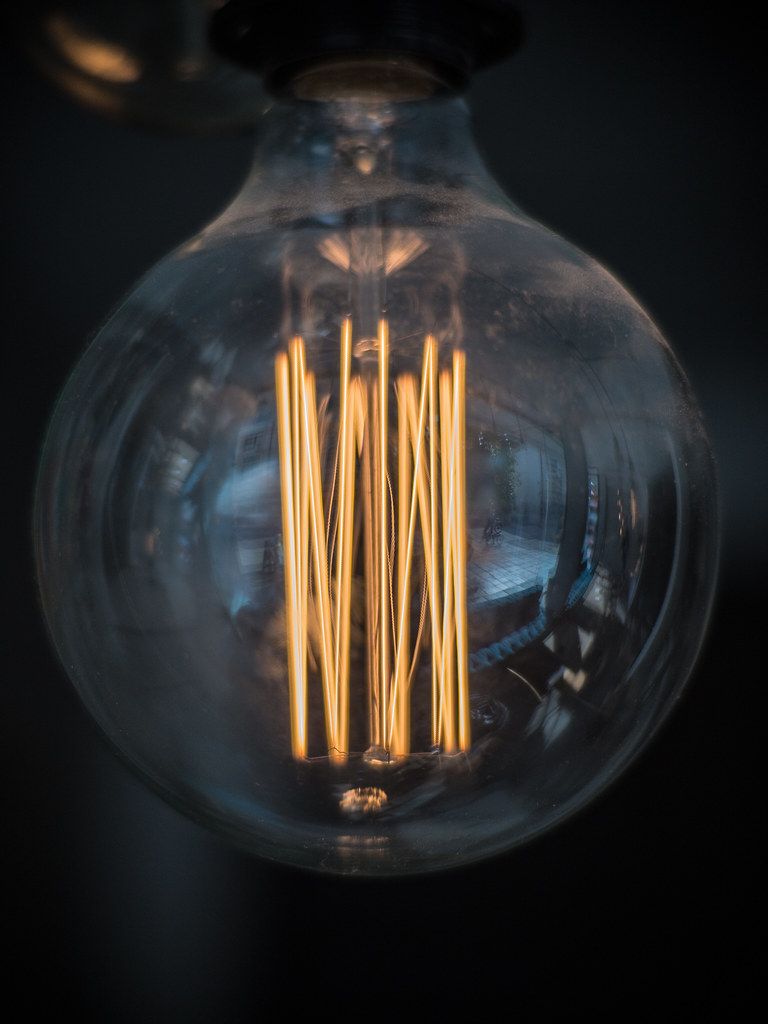
- FACT #129 A traditional incandescent bulb wastes most of its energy as heat — only a small fraction of the electricity becomes visible light, which is exactly why LED bulbs, which run far cooler, took over.
- FACT #130 The sky is blue because air scatters short-wavelength blue light from the Sun far more than red. At sunset, the light travels through more atmosphere, the blue is scattered away, and the reds and oranges reach your eyes.
- FACT #131 A rainbow is always a full circle; from the ground you usually see only an arc because the horizon cuts off the bottom. From a high-flying plane you can sometimes catch the whole ring.
- FACT #132 Mirrors aren't really "silver" or neutral — a common household mirror reflects very slightly green, because the glass absorbs a touch more red and blue light than green.
- FACT #133 Aerogel, one of the lightest solid materials ever made, is mostly air by volume — so ghostly and light it's been nicknamed "frozen smoke," yet it can insulate against surprising amounts of heat.
- FACT #134 Graphene, a sheet of carbon just one atom thick, is extraordinarily strong for its weight and conducts electricity beautifully. Its discoverers won the Nobel Prize in Physics in 2010.
- FACT #135 Ordinary tempered glass is engineered so its surface is under compression; that's why it's tough, and why when it finally fails it shatters into small blunt pebbles instead of dangerous shards.
- FACT #136 Light from the Sun takes about eight minutes to reach Earth, so you always see the Sun as it was eight minutes ago. Look up at noon and you're peering slightly into the past.
Weather & the Sky
- FACT #137 No two snowflakes are alike, in practice, because each one's six-sided shape is sculpted by the precise path of temperature and humidity it falls through — and no two flakes take exactly the same journey. All are six-sided, though, thanks to the way water molecules bond.
- FACT #138 You can estimate how far away lightning struck: count the seconds between the flash and the thunder and divide by about five for miles (or three for kilometers), since sound travels roughly a mile every five seconds.
- FACT #139 Raindrops are not tear-shaped. Small ones are nearly spherical, and larger falling drops flatten into a shape more like a tiny hamburger bun as air pushes up against the bottom.
- FACT #140 A large storm cloud can hold an astonishing amount of water — many thousands of tons in a single big thundercloud — held aloft as tiny droplets by rising air until they grow heavy enough to fall.
- FACT #141 Antarctica is technically the world's largest desert. "Desert" is defined by how little precipitation falls, not by heat — and the frozen continent is extraordinarily dry.
- FACT #142 The temperature of the air can drop noticeably during a total solar eclipse, sometimes by several degrees within minutes, as the Moon blocks the Sun's warmth — and birds and insects often behave as though dusk has arrived.
Forty-three facts and the lid's still off. Frank recommends carrying at least three of these to your next barbecue. When you're ready for the really big numbers, the Space Facts shelf » is right next door.
All facts double-checked. Frank does not round up. ★