Home » Fact Library » Word Facts
🔤 Word Facts
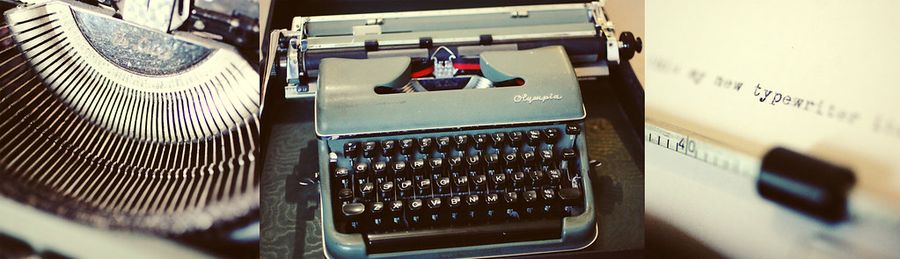
Every word you use is a fossil. "Disaster" has a bad star buried in it, "muscle" has a little mouse, and "goodbye" is a four-hundred-year-old blessing that got worn smooth from use. Frank types these pages on a machine older than most of his readers, so he takes language history personally.
The etymologies below come from the standard references — Frank leans on the Oxford English Dictionary and says so when it matters. Sharpen a pencil and dig in.
Etymology Corner
- FACT #500 "Quarantine" comes from the Italian for "forty days" — the length of time Venice made ships wait offshore during plague outbreaks.
- FACT #501 "Disaster" literally means "bad star." It comes through Italian from the Greek and Latin word for star — a calamity blamed on unlucky astrology.
- FACT #502 "Muscle" comes from the Latin musculus, "little mouse" — apparently because a flexing bicep looked like a mouse moving under the skin.
- FACT #503 The "mare" in "nightmare" isn't a horse. It's an old word for an evil spirit believed to sit on sleepers' chests.
- FACT #504 "Clue" comes from "clew," a ball of thread — like the one Theseus unspooled to find his way out of the labyrinth. To follow a clue was, originally, to follow the thread.
- FACT #505 "Goodbye" is a compressed blessing: it began as "God be with ye" and got squeezed down over the centuries.
- FACT #506 "Whiskey" comes from the Gaelic uisce beatha — "water of life."
- FACT #507 "Vodka" is a diminutive of the Russian voda, "water." So vodka is, roughly, "little water." The Slavs and the Gaels were on the same page here.
- FACT #508 "Checkmate" traces back to the Persian phrase shah mat — "the king is helpless."
- FACT #509 "Salary" comes from the Latin salarium, a word connected to sal, salt — though scholars still debate whether Roman soldiers were ever literally paid in the stuff.
- FACT #510 "Sideburns" are named after a person: Ambrose Burnside, a Civil War general with spectacular cheek whiskers. His name got flipped around on the way into the dictionary.
- FACT #511 "Avocado" entered Spanish, and then English, from ahuacatl — the fruit's name in Nahuatl, the language of the Aztecs.
- FACT #512 "Villain" originally just meant a farmhand — a worker on a villa. Snobbery about country folk gradually turned it sinister.
"The first recorded 'OMG' was written in 1917 — in a letter to Winston Churchill."
Frank says: a retired admiral coined it, per the Oxford English Dictionary. Texting didn't invent impatience; it just found it a home.
Meanings on the Move
- FACT #513 In Middle English, "girl" could mean a child of either sex. According to the Oxford English Dictionary, boys were sometimes called "knave girls."
- FACT #514 "Meat" originally meant food in general — any food. The old sense survives in the word "sweetmeats," which are candies, not cutlets.
- FACT #515 "Awful" once meant "full of awe" — awe-inspiring, worthy of reverence. Cathedrals were described as awful, and it was a compliment.
- FACT #516 "Silly" has had quite the career: it started out meaning blessed or happy, drifted to "innocent," then "harmless," then "pitiable," and finally landed on "foolish."
- FACT #517 "Nice" comes from the Latin nescius — "ignorant." In Middle English, calling someone nice meant calling them foolish. It took centuries of drift to become a compliment, and a bland one at that.
- FACT #518 English contains words that are their own opposites, called contronyms: "cleave" means both to split apart and to cling together, "dust" means to remove fine particles or to sprinkle them on, and "sanction" means to permit or to punish.
Alphabet Oddities
- FACT #519 The word "alphabet" is just the first two Greek letters — alpha and beta — stuck together.
- FACT #520 The ampersand (&) was once recited at the end of the alphabet. Schoolchildren finishing "X, Y, Z" would add "and, per se, and" — a mumble that fused into the word "ampersand."
- FACT #521 The dot over a lowercase i or j has a name: it's called a tittle.
- FACT #522 E is the most common letter in English — which is exactly what makes Fact #527 below so impressive.
- FACT #523 At the other end of the table, Z and Q battle for last place in English letter-frequency counts.
- FACT #524 W is the only English letter whose name has more than one syllable. It takes three syllables to say "double-u" — making W's name longer than most words it appears in.
- FACT #525 "The quick brown fox jumps over the lazy dog" is a pangram — it contains every letter of the alphabet — which is why generations of typists and telegraph operators used it as a test sentence.
- FACT #526 There are "perfect" pangrams that use all 26 letters exactly once. The most celebrated is "Mr Jock, TV quiz PhD, bags few lynx" — a complete, if unlikely, headline.
- FACT #527 In 1939, Ernest Vincent Wright published Gadsby, a novel of about 50,000 words written entirely without the letter E. He reportedly tied down the E key on his typewriter to keep himself honest.
- FACT #528 The # symbol has a gloriously odd formal name — the octothorpe — reportedly coined at Bell Labs in the 1960s when the symbol went on the telephone keypad.
✉️ Yes, Frank — Send Me the Free Weekly Facts!
Join the readers who win every trivia night.
One email every Friday. No spam, no nonsense, unsubscribe whenever you like. Frank's word is good.
Long Words, Short Words
- FACT #529 The longest word in major English dictionaries is pneumonoultramicroscopicsilicovolcanoconiosis — 45 letters, naming a lung disease from fine volcanic dust. It was coined deliberately in the 1930s, largely to be the longest word, and the dictionaries let it in anyway.
- FACT #530 Antidisestablishmentarianism — 28 letters — is the classic "longest real word" schoolchildren learn, referring to opposition to removing the Church of England's official status.
- FACT #531 "Sesquipedalian" means "given to using long words," and it comes from the Roman poet Horace, who teased writers for their sesquipedalia verba — "words a foot and a half long."
- FACT #532 Hippopotomonstrosesquippedaliophobia is a jokey coinage for the fear of long words. Whoever built it knew exactly what they were doing.
- FACT #533 "Uncopyrightable" and "dermatoglyphics" are each 15 letters long with no letter repeated — among the longest such words in English.
- FACT #534 "Strengths" packs nine letters around a single vowel — one of the longest one-syllable words in common English use.
- FACT #535 "Rhythm" gets through six letters without a single a, e, i, o, or u — the letter y does all the vowel work alone.
- FACT #536 "Bookkeeper" has three consecutive double letters: oo, kk, ee. Try finding another everyday word that pulls that off.
- FACT #537 Remove the last four letters of "queue" and it's pronounced exactly the same. The u-e-u-e is just standing in line, which feels appropriate.
- FACT #538 "Dreamt" — along with its relatives like "undreamt" — is the only common English word family ending in the letters -mt.
- FACT #539 "Typewriter" is one of the longest common English words you can type using only the top row of letters on a QWERTY keyboard. Frank suspects the machine's marketers noticed.
- FACT #540 "Stewardesses" is one of the longest common English words typed entirely with the left hand in standard touch-typing.
- FACT #541 "Go." is often cited as the shortest grammatically complete sentence in English — the subject "you" is understood.
- FACT #542 The Welsh village of Llanfairpwllgwyngyllgogerychwyrndrobwllllantysiliogogogoch — 58 letters — got its magnificent name in the 1860s, devised on purpose to attract railway tourists. It worked, and it's still working.
- FACT #543 The Finnish word saippuakivikauppias — a dealer in soapstone — is 19 letters long and reads the same backwards, cited by Guinness World Records as the longest everyday palindromic word.
Coined by Somebody
- FACT #544 "Robot" comes from the Czech robota, meaning forced labor. It debuted in Karel Čapek's 1920 play R.U.R. — and Karel credited his brother Josef with suggesting the word.
- FACT #545 "Pandemonium" was invented by the poet John Milton. In Paradise Lost, Pandæmonium — "place of all demons" — is the capital city of Hell.
- FACT #546 "Serendipity" was coined in 1754 by Horace Walpole, inspired by a Persian fairy tale called The Three Princes of Serendip, whose heroes kept making happy accidental discoveries.
- FACT #547 The first recorded "nerd" appears in a Dr. Seuss book — If I Ran the Zoo, from 1950 — as the name of a grumpy imaginary creature. (per the Oxford English Dictionary's earliest citation)
- FACT #548 The Oxford English Dictionary lists Shakespeare as the earliest recorded source for hundreds of words, including "lonely," "eyeball," and "assassination." Whether he invented them or just wrote them down first, the man kept the lexicographers busy.
- FACT #549 For decades, "set" held the record for the most senses of any word in the Oxford English Dictionary. The dictionary's own editors have said that in the ongoing revision, "run" has overtaken it.
Spelling Bee Nightmares
- FACT #550 The letters "ough" can be pronounced at least six different ways in English: through, though, tough, cough, bough, and thought. Learners of English are owed an apology.
- FACT #551 "I before E except after C" is a shaky rule at best. By some published counts, words that break it — like "science," "ancient," "weird," and "seize" — outnumber the words that follow it.
- FACT #552 "Orange," "silver," "purple," and "month" famously have no perfect rhyme in English. Poets have been quietly resenting them for centuries.
"A hill in New Zealand bears an 85-letter Māori name — the longest place name on Earth, according to Guinness World Records."
Frank says: locals sensibly shorten it to Taumata. Frank's typewriter ribbon thanks them.
Fifty-three words about words, all Frank-checked. For figures instead of letters, flip over to Number Facts, take a bite of Food Facts, or wander back to the Library Front Desk »